Beyond the Bin: How IoT is Solving the Silent Crisis of Urban Waste
Originally published at Medium
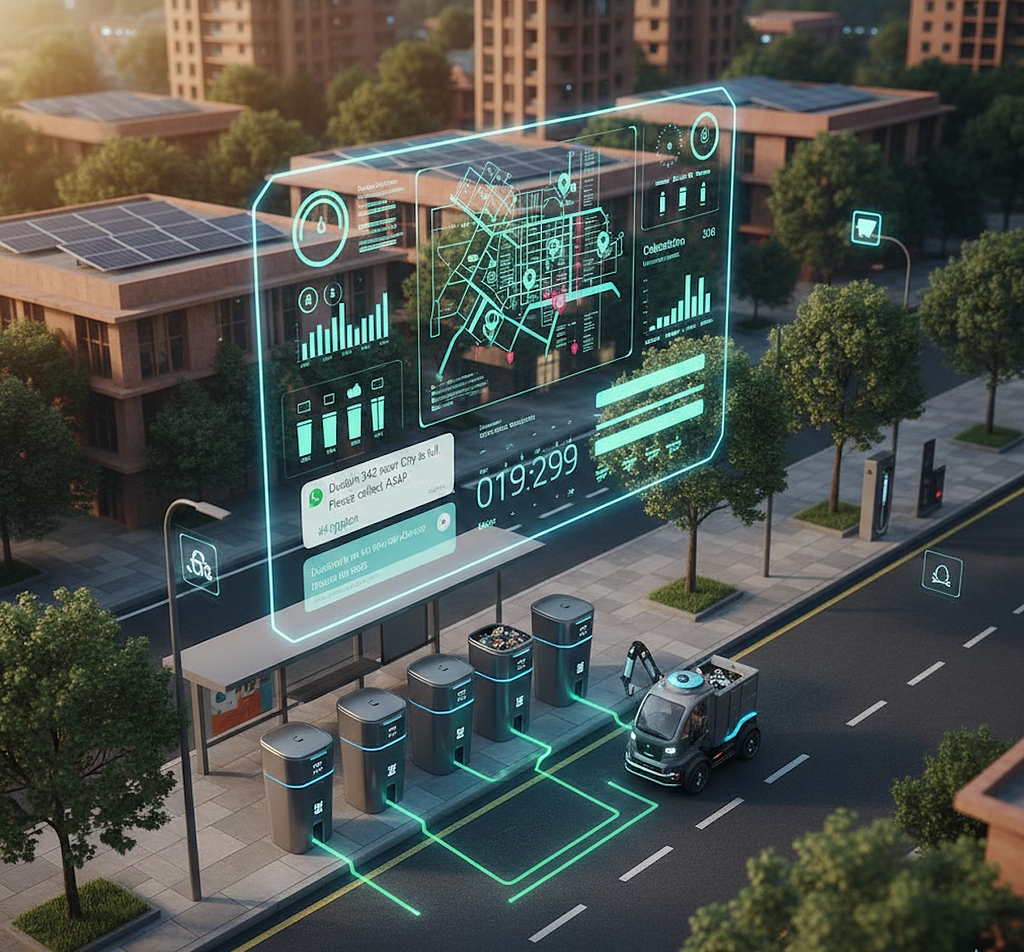
In the heart of every growing metropolis, a silent battle is being fought. It isn’t fought with sirens or headlines, but with something far more mundane: trash.
As urbanization accelerates — particularly in rapidly developing regions like India — the traditional infrastructure of our cities is buckling. We see it in the overflowing bins at bus stands, the foul odors near marketplaces, and the collection trucks idling in gridlocked traffic.
But the real problem isn’t just the waste itself; it’s the lack of intelligence in how we handle it.
The Inefficiency of “Guesswork”
For decades, waste management has relied on static schedules. A truck follows a pre-set route, stopping at every bin regardless of whether it is 10% full or 110% overflowing.
The result? A staggering waste of resources.
- The Fuel Gap: Studies suggest that inefficient routing increases fuel consumption and carbon emissions by nearly 40%.
- The Health Gap: Overflowing bins are not just eyesores; they are breeding grounds for disease and pests, directly impacting public hygiene.
- The Data Gap: Without real-time visibility, city planners are flying blind. You cannot optimize what you cannot measure.
Enter Krypton: The Internet of Bins
At Krypton, we viewed this not as a logistics problem, but as a data problem. By integrating IoT and AI into the very fabric of public sanitation, we’ve created a system that replaces fixed schedules with demand-driven action.
1. The Pulse of the City
Each Krypton-enabled dustbin is more than a container; it’s a node in a smart network. Using high-precision sensors, these bins monitor fill levels in real-time. This data isn’t just stored — it’s weaponized for efficiency.
2. Eliminating the Middleman
One of the biggest hurdles in municipal management is the delay between “problem identified” and “problem solved.” Krypton bridges this by sending automated alerts directly to on-site staff via WhatsApp and SMS. The moment a bin hits a threshold, the person on the ground knows. This decentralization of information ensures that collection happens in minutes, not days.
3. The Centralized Command Center
For authorities, the Krypton Dashboard provides a level of accountability previously impossible in public works.
- Verification: It logs exactly when a bin was emptied, creating a digital paper trail of performance.
- Predictive Analysis: Our AI doesn’t just react; it predicts. By analyzing historical footfall and usage patterns, the system can forecast surges — ensuring that a bin is emptied before the first piece of trash hits the pavement.
Why This Matters for the Future
The goal of a “Smart City” isn’t just to have high-tech gadgets; it’s to improve the quality of life for its citizens while protecting the environment.
By optimizing routes, we reduce the carbon footprint of heavy machinery by up to 50%. By ensuring timely collection, we reclaim the dignity of our public spaces.
As we move toward a world where sustainability is non-negotiable, the intelligence of our waste systems will define the health of our societies. Waste management is no longer just about cleaning up — it’s about waking up to the power of data.